Your Echinocandins mechanism of action images are available in this site. Echinocandins mechanism of action are a topic that is being searched for and liked by netizens now. You can Get the Echinocandins mechanism of action files here. Find and Download all royalty-free vectors.
If you’re looking for echinocandins mechanism of action images information related to the echinocandins mechanism of action interest, you have visit the right blog. Our website always provides you with suggestions for seeing the highest quality video and picture content, please kindly hunt and find more enlightening video articles and images that fit your interests.
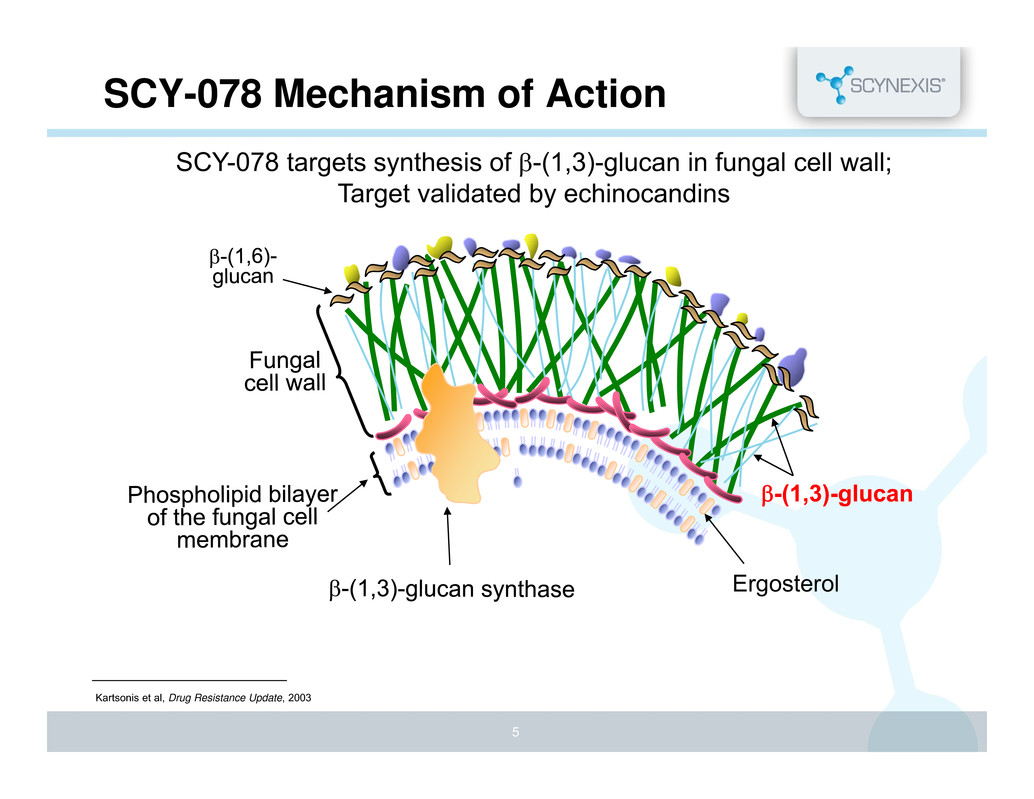
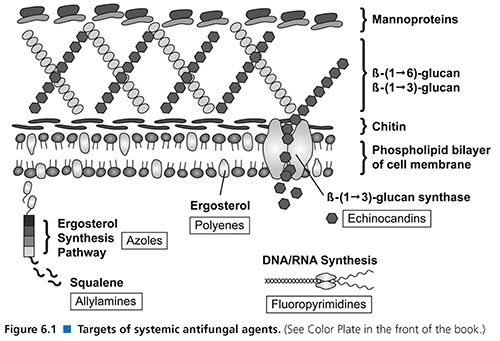
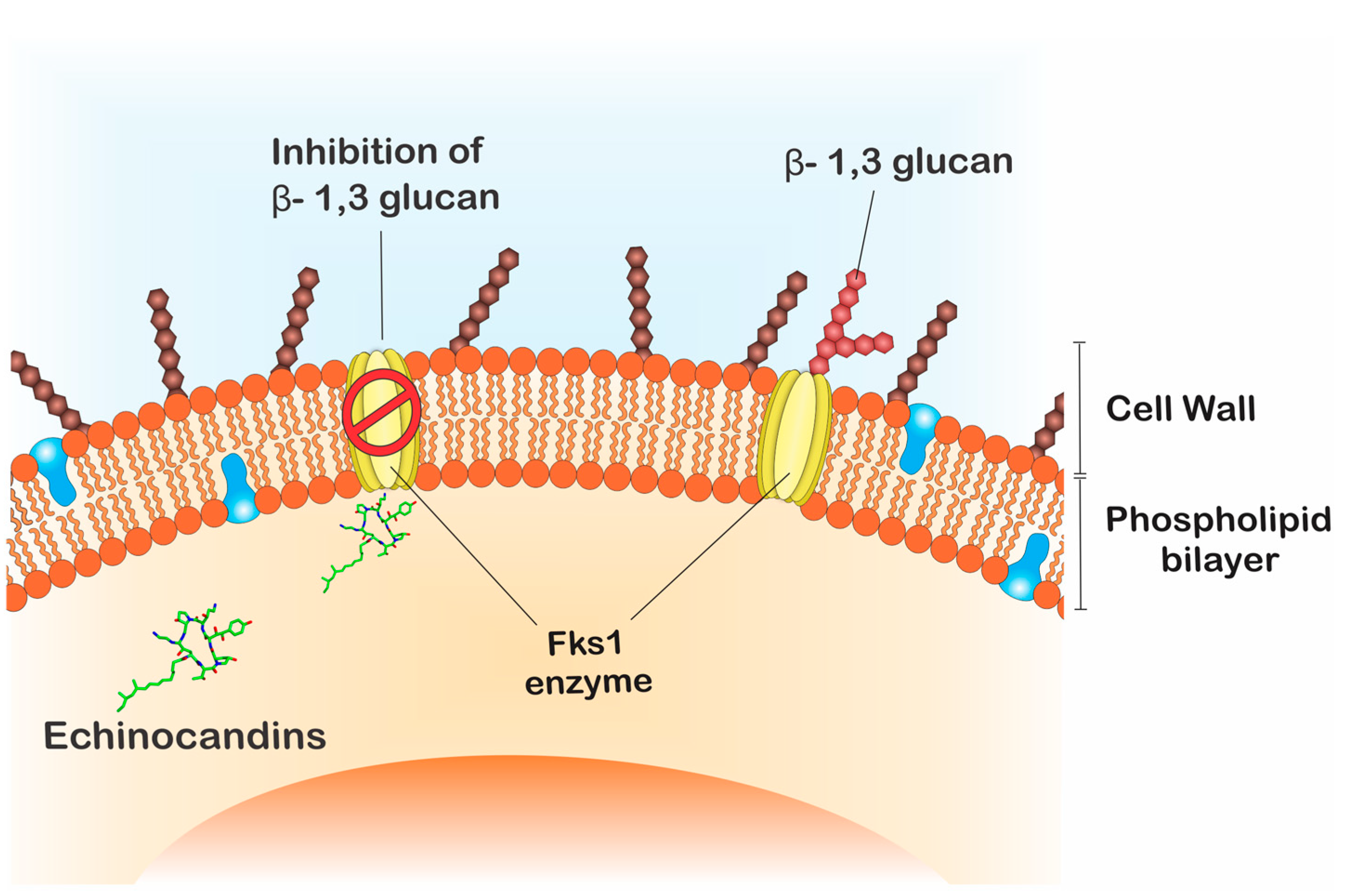
Echinocandins Mechanism Of Action. Echinocandins are used to treat invasive candidiasis. The mechanism of echinocandins includes immunomodulation and upregulation of innate host defenses. The echinocandins have a unique mechanism of action inhibiting beta- 13-D-glucan synthase an enzyme that is necessary for the synthesis of an essential component of the cell wall of several fungi. Since the time of their introduction they have come to occupy an important niche in the antifungal pharmacotherapy due to their efficacy safety tolerability and favourable pharmacokinetic.
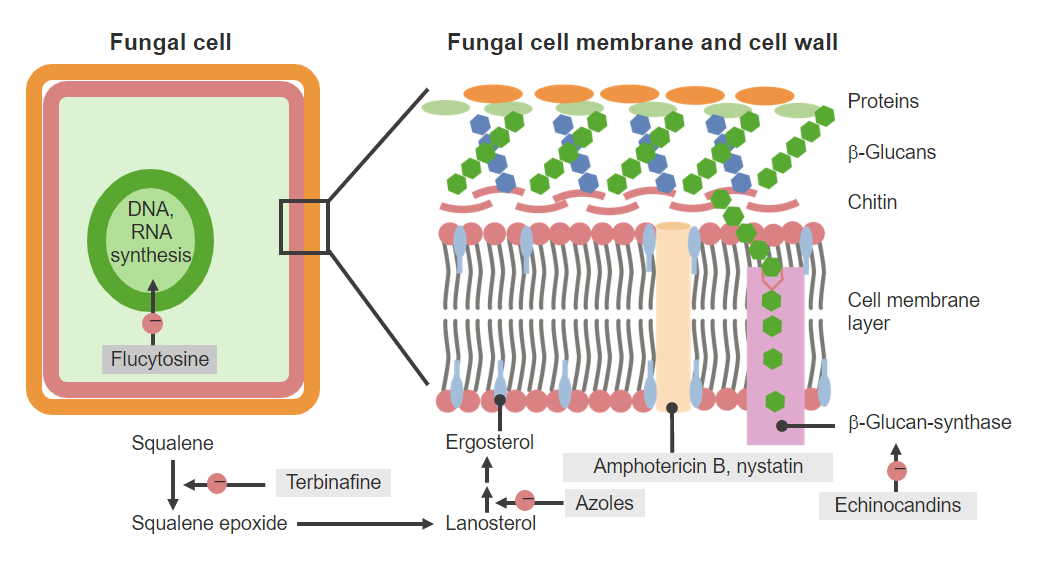
 Developing Antifungal Agents And Their Mechanisms Of Action Antifungal Download Scientific Diagram From researchgate.net
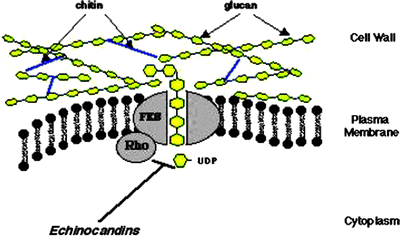
Since the time of their introduction they have come to occupy an important niche in the antifungal pharmacotherapy due to their efficacy safety tolerability and favourable pharmacokinetic. Stress signals at the cell surface are transmitted to Rho1 GTPase which mobilizes a. The echinocandins act as non competitive inhibitors of β - 1 3 - D-glucan synthase an essential component of the fungal cell wall that is not present in mammals. Which of the following is the mechanism of action of echinocandins. The mechanism of echinocandins includes immunomodulation and upregulation of innate host defenses. Echinocandins are used to treat invasive candidiasis.
By continuing to browse this site you are agreeing to our use of cookies.
Which of the following is the mechanism of action of echinocandins. Echinocandin is a noncompetitive inhibitor of the enzyme β- 13-glucan synthase. The echinocandins represent the first new antifungal drug class introduced for more than 15 years. Caspofungin micafungin and anidulafungin. Data have emerged regarding interactions between echinocandins and phagocytic cells. And predictable favourable kinetics allowing once a day dosing.
 Source: aspergillus.org.uk
6089 Echinocandins induce a set of genes from the protein kinase C PKC cell integritysignaling pathway 90 as well as those required for cell wall maintenance and architecture. The report suggested that echinocandins were efficiently transported into Candida cells and only acted on metabolically active and dividing cells but not on dormant ones. Caspofungin is also used as a second-line drug in invasive aspergillosis. Echinocandins alone do not completely inhibit in vitro growth of Aspergillus fumigatus but a powerful antifungal effect is seen in combination with phagocytes. Data have emerged regarding interactions between echinocandins and phagocytic cells.
 Source: researchgate.net
β- 13-glucan synthase is required for synthesis of β- 13-glucan from uridine diphosphate-glucose. Mechanism of action side effects and orgranisms affected mnemonic To easily remember anything related to Echinocandins eg. Inability of the organism to synthesize β - 1 3 - D-glucan leads to osmotic instability and cell death710. Used in CAN dida and a thing that CAN invade your body invasive. Caspofungin micafungin and anidulafungin.
 Source: sciencedirect.com
The mechanism of echinocandins includes immunomodulation and upregulation of innate host defenses. The echinocandins act as non competitive inhibitors of β - 1 3 - D-glucan synthase an essential component of the fungal cell wall that is not present in mammals. The echinocandins have a unique mechanism of action inhibiting beta- 13-D-glucan synthase an enzyme that is necessary for the synthesis of an essential component of the cell wall of several fungi. And predictable favourable kinetics allowing once a day dosing. In response fungi possess a repertoire of adaptive response mechanisms that protect against such destabilizing environmental stresses.
 Source: basicmedicalkey.com
The mechanism of echinocandins includes immunomodulation and upregulation of innate host defenses. Their strengths include low toxicity rapid fungicidal activity against most isolates of Candida spp. Since the time of their introduction they have come to occupy an important niche in the antifungal pharmacotherapy due to their efficacy safety tolerability and favourable pharmacokinetic profiles. Caspofungin is also used as a second-line drug in invasive aspergillosis. They inhibit the fungal enzyme β13-d-glucan synthase and prevent production of the main structural polymer in the fungal cell wall.
 Source: researchgate.net
Their strengths include low toxicity rapid fungicidal activity against most isolates of Candida spp. Caspofungin is also used as a second-line drug in invasive aspergillosis. In response fungi possess a repertoire of adaptive response mechanisms that protect against such destabilizing environmental stresses. The echinocandins have a unique mechanism of action inhibiting beta- 13-D-glucan synthase an enzyme that is necessary for the synthesis of an essential component of the cell wall of several fungi. β- 13-glucan is a structural component of the fungal wal.
 Source: researchgate.net
Since the time of their introduction they have come to occupy an important niche in the antifungal pharmacotherapy due to their efficacy safety tolerability and favourable pharmacokinetic profiles. At the present time the echinocandins are an option for the treatment of infections due Candida spp such as esophageal candidiasis invasive candidiasis and candidemia. The echinocandins act as non competitive inhibitors of β - 1 3 - D-glucan synthase an essential component of the fungal cell wall that is not present in mammals. Since the time of their introduction they have come to occupy an important niche in the antifungal pharmacotherapy due to their efficacy safety tolerability and favourable pharmacokinetic profiles. Caspofungin is also used as a second-line drug in invasive aspergillosis.
 Source: mdpi.com
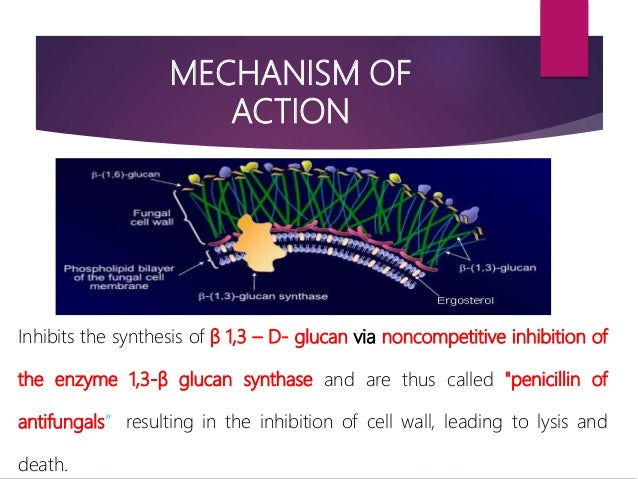
They inhibit the fungal enzyme β13-d-glucan synthase and prevent production of the main structural polymer in the fungal cell wall. Disrupt metabolic processes O B. Since the time of their introduction they have come to occupy an important niche in the antifungal pharmacotherapy due to their efficacy safety tolerability and favourable pharmacokinetic. The report suggested that echinocandins were efficiently transported into Candida cells and only acted on metabolically active and dividing cells but not on dormant ones. Echinocandins are a class of antifungal drugs 1 that inhibit the synthesis of β-glucan in the fungal cell wall via noncompetitive inhibition of the enzyme 13-β glucan synthase.
 Source: osmosis.org
Echinocandins are used to treat invasive candidiasis. Mechanism of action side effects and orgranisms affected mnemonic To easily remember anything related to Echinocandins eg. The echinocandins represent the first new antifungal drug class introduced for more than 15 years. These agents possess a completely novel mechanism of action are relatively well-tolerated and have a low potential for serious drugdrug interactions. Caspofungin micafungin and anidulafungin.
 Source: lecturio.com
These agents possess a completely novel mechanism of action are relatively well-tolerated and have a low potential for serious drugdrug interactions. They inhibit the synthesis of β- d -glucan in fungal cell walls. By continuing to browse this site you are agreeing to our use of cookies. The echinocandins have a unique mechanism of action inhibiting beta- 13-D-glucan synthase an enzyme that is necessary for the synthesis of an essential component of the cell wall of several fungi. 6089 Echinocandins induce a set of genes from the protein kinase C PKC cell integritysignaling pathway 90 as well as those required for cell wall maintenance and architecture.
 Source: link.springer.com
The mechanism of echinocandins includes immunomodulation and upregulation of innate host defenses. In response fungi possess a repertoire of adaptive response mechanisms that protect against such destabilizing environmental stresses. And predictable favourable kinetics allowing once a day dosing. Since the time of their introduction they have come to occupy an important niche in the antifungal pharmacotherapy due to their efficacy safety tolerability and favourable pharmacokinetic. 6089 Echinocandins induce a set of genes from the protein kinase C PKC cell integritysignaling pathway 90 as well as those required for cell wall maintenance and architecture.
 Source: researchgate.net
In response fungi possess a repertoire of adaptive response mechanisms that protect against such destabilizing environmental stresses. Disrupt metabolic processes O B. They inhibit the synthesis of β- d -glucan in fungal cell walls. The mechanism of echinocandins includes immunomodulation and upregulation of innate host defenses. Echinocandins alone do not completely inhibit in vitro growth of Aspergillus fumigatus but a powerful antifungal effect is seen in combination with phagocytes.
 Source: oncohemakey.com
At the present time the echinocandins are an option for the treatment of infections due Candida spp such as esophageal candidiasis invasive candidiasis and candidemia. ConfigCtrl2infometaDescription This site uses cookies. By continuing to browse this site you are agreeing to our use of cookies. The mechanism of echinocandins includes immunomodulation and upregulation of innate host defenses. Echinocandins are the newest addition of the last decade to the antifungal armamentarium which owing to their unique mechanism of action selectively target the fungal cells without affecting mammalian cells.
 Source: encyclopedia.pub
Since the time of their introduction they have come to occupy an important niche in the antifungal pharmacotherapy due to their efficacy safety tolerability and favourable pharmacokinetic. The echinocandins have a unique mechanism of action inhibiting beta- 13-D-glucan synthase an enzyme that is necessary for the synthesis of an essential component of the cell wall of several fungi. The report suggested that echinocandins were efficiently transported into Candida cells and only acted on metabolically active and dividing cells but not on dormant ones. Inhibit synthesis of B-glu CAN. Echinocandins target the glucans that are found in fungal cell walls but not in human cells see Fig.
 Source: researchgate.net
Caspofungin Micafungin just think of the letters C A and N CAN D. The echinocandins represent the first new antifungal drug class introduced for more than 15 years. The echinocandins act as non competitive inhibitors of β - 1 3 - D-glucan synthase an essential component of the fungal cell wall that is not present in mammals. By continuing to browse this site you are agreeing to our use of cookies. β- 13-glucan synthase is required for synthesis of β- 13-glucan from uridine diphosphate-glucose.
 Source: slideshare.net
Echinocandins are a class of antifungal drugs 1 that inhibit the synthesis of β-glucan in the fungal cell wall via noncompetitive inhibition of the enzyme 13-β glucan synthase. Inhibit ergosterol synthesis O D. The report suggested that echinocandins were efficiently transported into Candida cells and only acted on metabolically active and dividing cells but not on dormant ones. Their strengths include low toxicity rapid fungicidal activity against most isolates of Candida spp. Echinocandins are the newest addition of the last decade to the antifungal armamentarium which owing to their unique mechanism of action selectively target the fungal cells without affecting mammalian cells.
 Source: researchgate.net
Echinocandins are the newest addition of the last decade to the antifungal armamentarium which owing to their unique mechanism of action selectively target the fungal cells without affecting mammalian cells. These agents possess a completely novel mechanism of action are relatively well-tolerated and have a low potential for serious drugdrug interactions. Stress signals at the cell surface are transmitted to Rho1 GTPase which mobilizes a. Echinocandins are the newest addition of the last decade to the antifungal armamentarium which owing to their unique mechanism of action selectively target the fungal cells without affecting mammalian cells. Echinocandins are the newest addition of the last decade to the antifungal armamentarium which owing to their unique mechanism of action selectively target the fungal cells without affecting mammalian cells.
Source: researchgate.net
The echinocandins act as non competitive inhibitors of β - 1 3 - D-glucan synthase an essential component of the fungal cell wall that is not present in mammals. Since the time of their introduction they have come to occupy an important niche in the antifungal pharmacotherapy due to their efficacy safety tolerability and favourable pharmacokinetic. Disrupt metabolic processes O B. These agents possess a completely novel mechanism of action are relatively well-tolerated and have a low potential for serious drugdrug interactions. Caspofungin is also used as a second-line drug in invasive aspergillosis.
 Source: onlinelibrary.wiley.com
In response fungi possess a repertoire of adaptive response mechanisms that protect against such destabilizing environmental stresses. Echinocandin is a noncompetitive inhibitor of the enzyme β- 13-glucan synthase. Inhibit ergosterol synthesis O D. Echinocandins are the newest addition of the last decade to the antifungal armamentarium which owing to their unique mechanism of action selectively target the fungal cells without affecting mammalian cells. Echinocandins target the glucans that are found in fungal cell walls but not in human cells see Fig.
This site is an open community for users to do submittion their favorite wallpapers on the internet, all images or pictures in this website are for personal wallpaper use only, it is stricly prohibited to use this wallpaper for commercial purposes, if you are the author and find this image is shared without your permission, please kindly raise a DMCA report to Us.
If you find this site convienient, please support us by sharing this posts to your own social media accounts like Facebook, Instagram and so on or you can also save this blog page with the title echinocandins mechanism of action by using Ctrl + D for devices a laptop with a Windows operating system or Command + D for laptops with an Apple operating system. If you use a smartphone, you can also use the drawer menu of the browser you are using. Whether it’s a Windows, Mac, iOS or Android operating system, you will still be able to bookmark this website.


