Your Decitabine mechanism of action images are ready. Decitabine mechanism of action are a topic that is being searched for and liked by netizens now. You can Find and Download the Decitabine mechanism of action files here. Download all royalty-free vectors.
If you’re searching for decitabine mechanism of action images information related to the decitabine mechanism of action topic, you have pay a visit to the right blog. Our site always gives you hints for seeking the highest quality video and image content, please kindly search and locate more informative video articles and images that match your interests.
Decitabine Mechanism Of Action. In contrast decitabine 5-aza-2-deoxycytidine is a deoxyribonucleoside so it can only incorporate into DNA. To maximize the clinical efficacy of azacytidine and decitabine it will be important to understand the molecular changes. The preclinical pharmacology of 5-aza-2-deoxycytidine decitabine 5AZA-CdR is reviewed. The risk or severity of.
 Chemical Properties Of Decitabine And S Phase Dependent Download Scientific Diagram From researchgate.net
Azacitidine is mainly converted to azacitidine triphosphate which is incorporated into the RNA. The mechanism of action of heparin is ATIII-dependent. Clinical experience with 5-azacytidine and decitabine treatment of myelodysplastic syndromes MDS complemented by biological and pharmacological studies has revealed compelling mechanism of action differences compared with traditional myeloid cancer treatment mainstays such as cytarabine. Reactivation of silenced genes and differentiation at low doses and cytotoxicity at high doses. 289 rows Decitabine is phosphorylated inside cells by the sequential action of deoxycytidine kinase. Talk To Your Health Care Professional About A Potential Development In MDS Treatment.
Azacitidine is mainly converted to azacitidine triphosphate which is incorporated into the RNA.
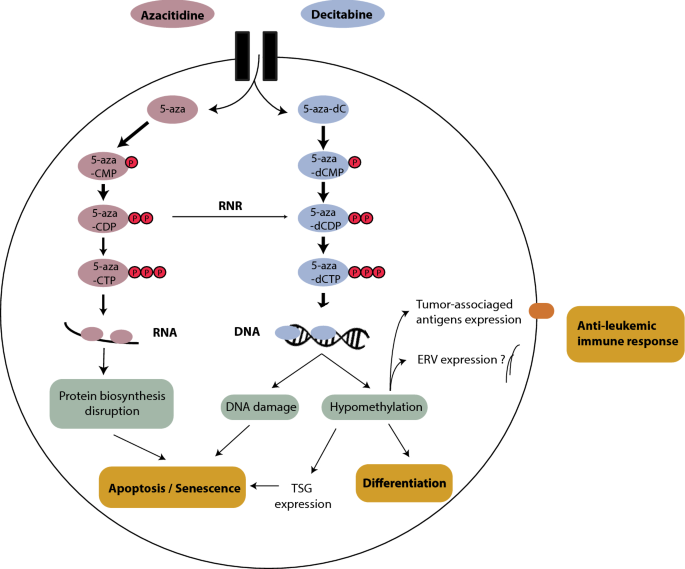
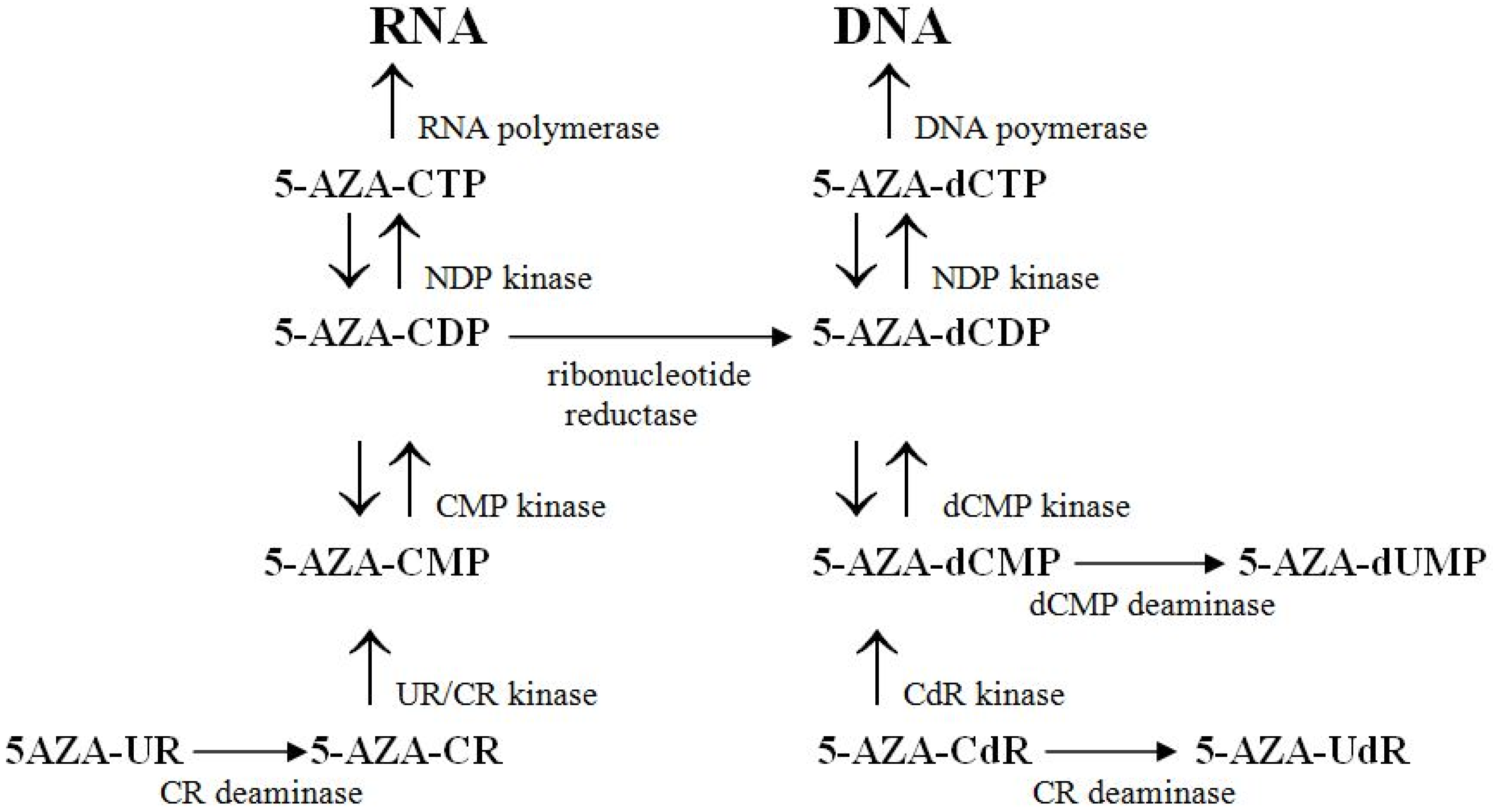
Decitabine is a Nucleoside Metabolic Inhibitor. The mechanism of action of decitabine is as a Nucleic Acid Synthesis Inhibitor. Decitabine 5-aza-2-deoxycytidine is a hypomethylating agent with a dual mechanism of action. The exact mechanism of decitabine activity has not been determined and may involve multiple pathways. Following cellular uptake azacitidine and decitabine are converted into their monophosphates diphosphates and triphosphates. The risk or severity of adverse effects can be increased when Capecitabine is.
 Source: eurekalert.org
The cytidine-nucleoside analogs decitabine and azacitidine are DNA methyltransferase DNMT inhibitors hypomethylating agents HMAs that incorporate into DNA during the S-phase of the cell cycle thereby reducing methylation of cytosine-phosphate-guanine dinucleotide residues in genomic DNA and in turn modifying epigenetic patters and gene expression. Following cellular uptake azacitidine and decitabine are converted into their monophosphates diphosphates and triphosphates. The risk or severity of. The risk or severity of adverse effects can be increased when Capecitabine is. 289 rows Decitabine is phosphorylated inside cells by the sequential action of deoxycytidine kinase.
 Source: researchgate.net
In contrast decitabine 5-aza-2-deoxycytidine is a deoxyribonucleoside so it can only incorporate into DNA. The risk or severity of. Capecitabine is a prodrug that is selectively tumour-activated to its cytotoxic moiety fluorouracil by thymidine phosphorylase an enzyme found in higher concentrations in many tumors compared to normal tissues or plasma. Action of these drugs in patients and it appears that clinical responses are influenced both by epigenetic alterations and by ap-optosis induction. Talk To Your Health Care Professional About A Potential Development In MDS Treatment.
 Source: oncologynurseadvisor.com
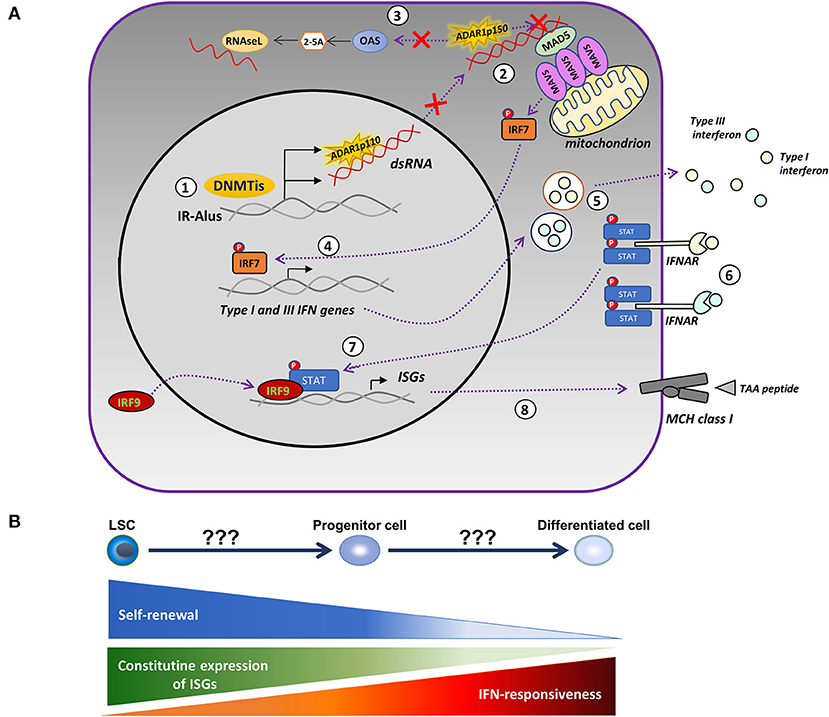
Following cellular uptake azacitidine and decitabine are converted into their monophosphates diphosphates and triphosphates. To maximize the clinical efficacy of azacytidine and decitabine it will be important to understand the molecular changes. 5AZA-CdR an analogue of deoxycytidine is a prodrug that requires metabolic activation by deoxycytidine kinase. Ad Understand The Link Between The Immune System And How MDS Develops And Progresses. These compounds function as DNA methyltransferase inhibitors and have shown substantial potency in reactivating epigenetically silenced tumor suppressor genes in vitro.
Source: researchgate.net
Decitabine is a Nucleoside Metabolic Inhibitor. The preclinical pharmacology of 5-aza-2-deoxycytidine decitabine 5AZA-CdR is reviewed. In contrast decitabine 5-aza-2-deoxycytidine is a deoxyribonucleoside so it can only incorporate into DNA. 289 rows Decitabine is phosphorylated inside cells by the sequential action of deoxycytidine kinase. Ad Understand The Link Between The Immune System And How MDS Develops And Progresses.
 Source: blogs.shu.edu
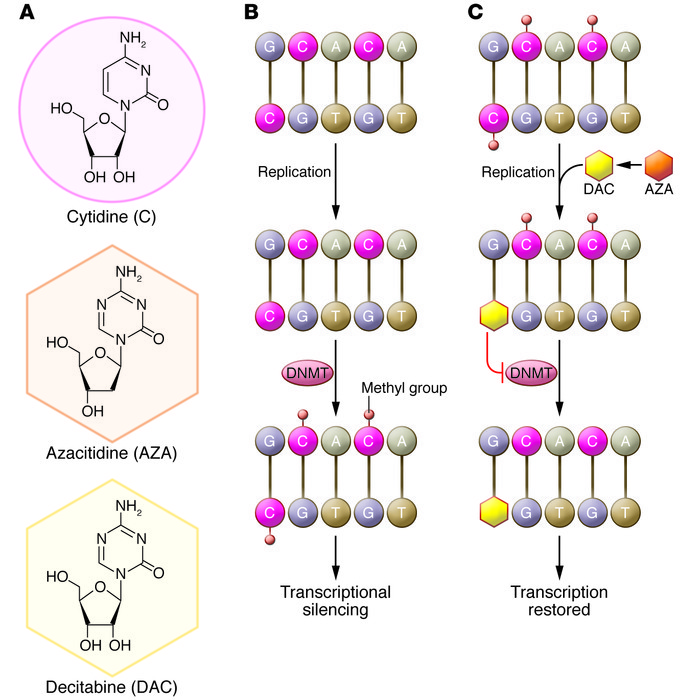
The active inhibitor in the cell is its triphosphate form 5AZA-dCTP which incorporates very readily into DNA to produce an inhibition of DNA methyltransferase. The cytidine-nucleoside analogs decitabine and azacitidine are DNA methyltransferase DNMT inhibitors hypomethylating agents HMAs that incorporate into DNA during the S-phase of the cell cycle thereby reducing methylation of cytosine-phosphate-guanine dinucleotide residues in genomic DNA and in turn modifying epigenetic patters and gene expression. To maximize the clinical efficacy of azacytidine and decitabine it will be important to understand the molecular changes. For example 5-azacytidine and decitabine produce remissions and better overall survival in. Decitabine is an antimetabolite that can replace cytosine in DNA but unlike cytosine it cannot be methylated.
 Source: researchgate.net
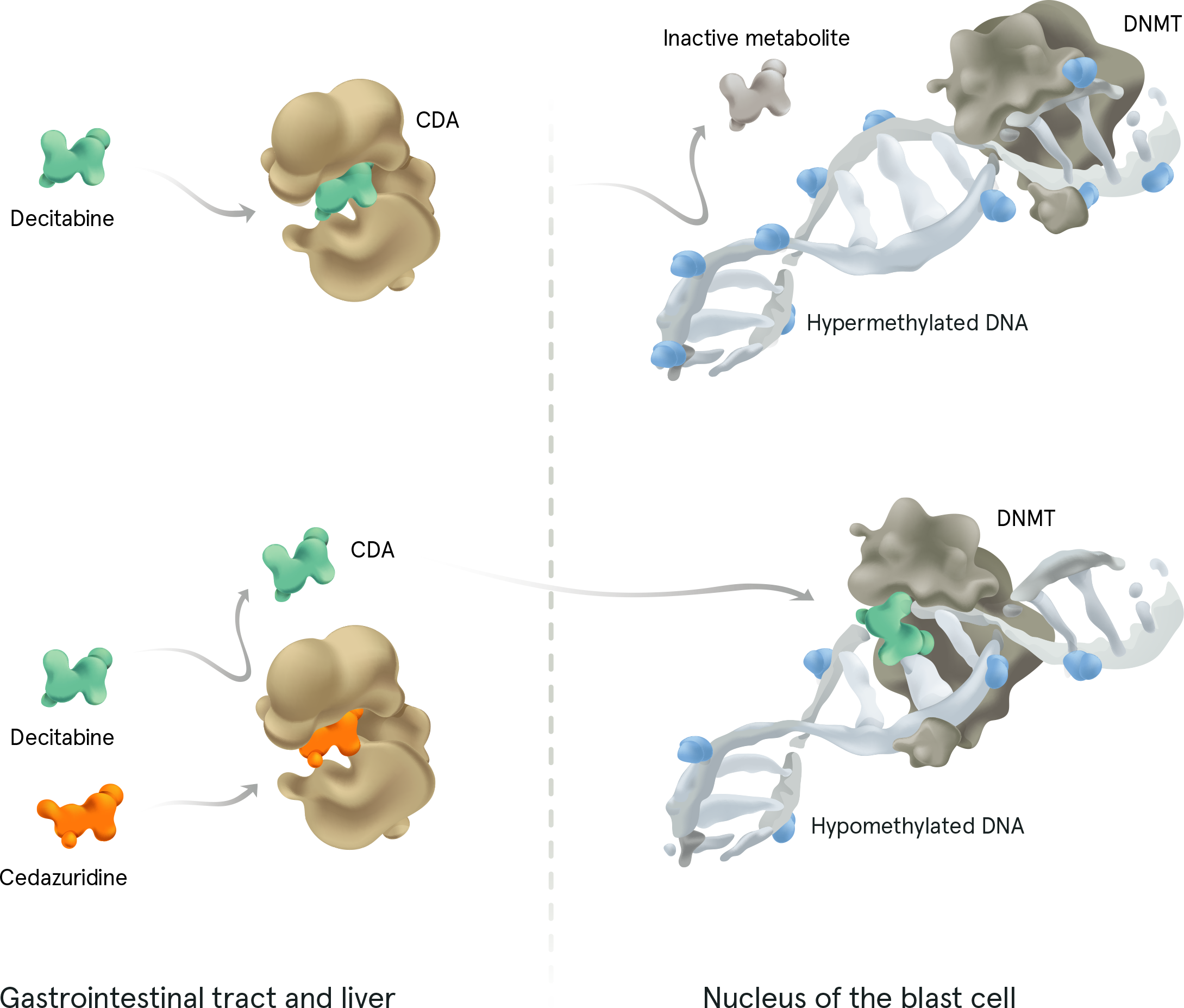
Oral decitabine and cedazuridine was designed to deliver decitabine by oral administration. 289 rows Decitabine is phosphorylated inside cells by the sequential action of deoxycytidine kinase. The risk or severity of. The preclinical pharmacology of 5-aza-2-deoxycytidine decitabine 5AZA-CdR is reviewed. Epigenetic Cancer Therapy 2015.
 Source: researchgate.net
The cytidine-nucleoside analogs decitabine and azacitidine are DNA methyltransferase DNMT inhibitors hypomethylating agents HMAs that incorporate into DNA during the S-phase of the cell cycle thereby reducing methylation of cytosine-phosphate-guanine dinucleotide residues in genomic DNA and in turn modifying epigenetic patters and gene expression. The active inhibitor in the cell is its triphosphate form 5AZA-dCTP which incorporates very readily into DNA to produce an inhibition of DNA methyltransferase. At low doses it does not block cell cycle progression. Clinical experience with 5-azacytidine and decitabine treatment of myelodysplastic syndromes MDS complemented by biological and pharmacological studies has revealed compelling mechanism of action differences compared with traditional myeloid cancer treatment mainstays such as cytarabine. Decitabine is an antimetabolite that can replace cytosine in DNA but unlike cytosine it cannot be methylated.
 Source: researchgate.net
Azacitidine is mainly converted to azacitidine triphosphate which is incorporated into the RNA. In contrast decitabine 5-aza-2-deoxycytidine is a deoxyribonucleoside so it can only incorporate into DNA. At these doses decitabine was found to be active in. Decitabine is a Nucleoside Metabolic Inhibitor. The mechanism of action of heparin is ATIII-dependent.
 Source: researchgate.net
By inhibiting cytidine deaminase cedazuridine inhibits the major mechanism by which decitabine is degraded in the gut and liver and the combination therefore permits the efficient delivery of decitabine orally. The preclinical pharmacology of 5-aza-2-deoxycytidine decitabine 5AZA-CdR is reviewed. Decitabine is a Nucleoside Metabolic Inhibitor. 12 The inhibition of DNA. The original studies in the 1980s used decitabine as a classical anticancer drug at its maximum clinically tolerated dose 1500 to 2500 mgm 2 per course.
 Source: researchgate.net
These compounds function as DNA methyltransferase inhibitors and have shown substantial potency in reactivating epigenetically silenced tumor suppressor genes in vitro. The active inhibitor in the cell is its triphosphate form 5AZA-dCTP which incorporates very readily into DNA to produce an inhibition of DNA methyltransferase. At low doses it does not block cell cycle progression. At these doses decitabine was found to be active in. Reactivation of silenced genes and differentiation at low doses and cytotoxicity at high doses.
 Source: inqovi.com
To maximize the clinical efficacy of azacytidine and decitabine it will be important to understand the molecular changes. Ad Understand The Link Between The Immune System And How MDS Develops And Progresses. Decitabine is an antimetabolite that can replace cytosine in DNA but unlike cytosine it cannot be methylated. The original studies in the 1980s used decitabine as a classical anticancer drug at its maximum clinically tolerated dose 1500 to 2500 mgm 2 per course. The preclinical pharmacology of 5-aza-2-deoxycytidine decitabine 5AZA-CdR is reviewed.
 Source: researchgate.net
5AZA-CdR an analogue of deoxycytidine is a prodrug that requires metabolic activation by deoxycytidine kinase. 5AZA-CdR an analogue of deoxycytidine is a prodrug that requires metabolic activation by deoxycytidine kinase. The risk or severity of. The antithrombotic effect of heparin is well correlated to the inhibition of factor Xa. The mechanism of action of heparin is ATIII-dependent.
Source:
Following cellular uptake azacitidine and decitabine are converted into their monophosphates diphosphates and triphosphates. 289 rows Decitabine is phosphorylated inside cells by the sequential action of deoxycytidine kinase. Epigenetic Cancer Therapy 2015. Ad Understand The Link Between The Immune System And How MDS Develops And Progresses. Decitabine triphosphate is a deoxyribonucleotide that is incorporated only into DNA.
 Source: link.springer.com
Talk To Your Health Care Professional About A Potential Development In MDS Treatment. The cytosine analogues 5-azacytosine azacytidine and 2-deoxy-5-azacytidine decitabine are the currently most advanced drugs for epigenetic cancer therapies. The risk or severity of adverse effects can be increased when Capecitabine is. The exact mechanism of decitabine activity has not been determined and may involve multiple pathways. At low doses it does not block cell cycle progression.
 Source: frontiersin.org
Pharmacology pharmacokinetics Given that the antineoplastic action of decitabine is a result of its incorporation into newly synthe-sized DNA it is an S phase-specific agent 11. The risk or severity of adverse effects can be increased when Capecitabine is. The preclinical pharmacology of 5-aza-2-deoxycytidine decitabine 5AZA-CdR is reviewed. Clinical experience with 5-azacytidine and decitabine treatment of myelodysplastic syndromes MDS complemented by biological and pharmacological studies has revealed compelling mechanism of action differences compared with traditional myeloid cancer treatment mainstays such as cytarabine. 12 The inhibition of DNA.
 Source: mdpi.com
The mechanism of action of heparin is ATIII-dependent. At low doses it does not block cell cycle progression. Azacitidines incorporation into RNA leads to the disassembly of polyribosomes defective methylation and acceptor function of transfer RNA and inhibition of the production of proteins. 5AZA-CdR an analogue of deoxycytidine is a prodrug that requires metabolic activation by deoxycytidine kinase. Azacitidine is mainly converted to azacitidine triphosphate which is incorporated into the RNA.
 Source: geriatriconcology.net
The risk or severity of adverse effects can be increased when Capecitabine is. The active inhibitor in the cell is its triphosphate form 5AZA-dCTP which incorporates very readily into DNA to produce an inhibition of DNA methyltransferase. Mate antineoplastic mechanism of action for decitabine could be very pleiotropic and deserves further investigation. Decitabine triphosphate is a deoxyribonucleotide that is incorporated only into DNA. Decitabine 5-aza-2-deoxycytidine is a cytosine analogue that inhibits DNA methyltransferases reverses methylation and can reactivate silenced genes 7273.
 Source: sciencedirect.com
The exact mechanism of decitabine activity has not been determined and may involve multiple pathways. Following cellular uptake azacitidine and decitabine are converted into their monophosphates diphosphates and triphosphates. Pharmacology pharmacokinetics Given that the antineoplastic action of decitabine is a result of its incorporation into newly synthe-sized DNA it is an S phase-specific agent 11. To maximize the clinical efficacy of azacytidine and decitabine it will be important to understand the molecular changes. Decitabine 5-aza-2-deoxycytidine is a cytosine analogue that inhibits DNA methyltransferases reverses methylation and can reactivate silenced genes 7273.
This site is an open community for users to submit their favorite wallpapers on the internet, all images or pictures in this website are for personal wallpaper use only, it is stricly prohibited to use this wallpaper for commercial purposes, if you are the author and find this image is shared without your permission, please kindly raise a DMCA report to Us.
If you find this site helpful, please support us by sharing this posts to your preference social media accounts like Facebook, Instagram and so on or you can also bookmark this blog page with the title decitabine mechanism of action by using Ctrl + D for devices a laptop with a Windows operating system or Command + D for laptops with an Apple operating system. If you use a smartphone, you can also use the drawer menu of the browser you are using. Whether it’s a Windows, Mac, iOS or Android operating system, you will still be able to bookmark this website.


