Your Cardiac myocyte action potential images are ready. Cardiac myocyte action potential are a topic that is being searched for and liked by netizens today. You can Download the Cardiac myocyte action potential files here. Find and Download all free vectors.
If you’re searching for cardiac myocyte action potential images information linked to the cardiac myocyte action potential keyword, you have visit the ideal blog. Our site frequently provides you with suggestions for viewing the highest quality video and image content, please kindly surf and find more enlightening video content and graphics that fit your interests.
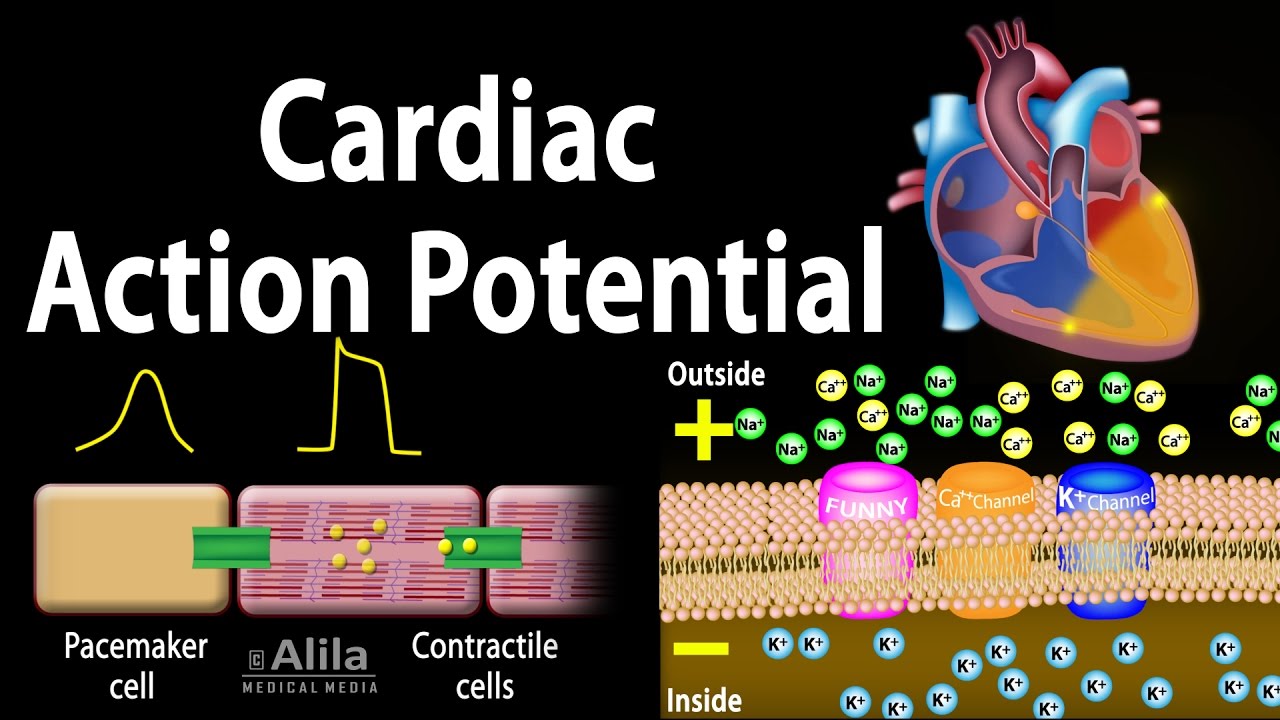
Cardiac Myocyte Action Potential. Loss of the notch resulted in about a 50 reduction in the initial phase of t. Function of Cardiomyocytes Mechanism Cardiomyocytes go through a contraction-relaxation cycle that enables cardiac muscles to pump blood throughout the body. The magnitude of this difference is about 90 mV. When a cardiac myocyte becomes stimulated the resting membrane potential -90 mV becomes more positive and an action potential is generated if the threshold -70 mV is met.
 Action Potential Of Cardiac Muscle And Skeletal Muscle Compared Anatomy And Physiology Physiology Cardiac From pinterest.com
Nervous and muscle cells as well as non-pacemaker cardiac cells use the opening of Na channels to facilitate the depolarisation phase whereas cardiac. Many more events happen that are not spoken about in this video but it is a great fou. The Cardiac Action Potentials. Two of these phase 2 the plateau phase and phase 4 the diastolic interval are marked by little to no change in voltage. It is the slow depolarisation of the pacemaker cells eg. The cardiac cell action potential like action potentials in nerves is divided into five phases numbered 0 through 4.
The resting membrane potential RMP is -90mv.
This diagram is a diagram of a cardiac myocyte a ventricular muscle cell as apposed to a cardiac pacemaker cell. Modulation of the Cardiac Myocyte Action Potential by the Magnesium-Sensitive TRPM6 and TRPM7-like Current. The Cardiac Action Potentials. Myocytes are different from skeletal muscle cells which get their action potential signals directly from neurons. The action potential in the SA node occurs in three phases which are discussed below. Unlike pacemaker cells found in nodal tissue within the heart non-pacemaker cells have a true resting membrane potential phase 4 that remains.
 Source: pinterest.com
A membrane potential is the difference in electrical potential between the interior and the exterior of the cell membrane. The resting membrane potential RMP is -90mv. Because these action potentials undergo very rapid depolarization they are sometimes referred to as fast response action potentials. Briefly the action potential was recorded using patch pipettes at 37 with an external control solution containing in mmolL NaCl 140 KCl. This diagram is a diagram of a cardiac myocyte a ventricular muscle cell as apposed to a cardiac pacemaker cell.
 Source: pinterest.com
A membrane potential is the difference in electrical potential between the interior and the exterior of the cell membrane. Okay now lets take a closer look at the chemistry that gets that action potential moving. Myocytes are also called contractile cells because they contract to allow the heart to pump blood. Two of these phase 2 the plateau phase and phase 4 the diastolic interval are marked by little to no change in voltage. Briefly the action potential was recorded using patch pipettes at 37 with an external control solution containing in mmolL NaCl 140 KCl.
 Source: pinterest.com
Sodium potassium and calcium are the primary ions. The cardiac action potential is a measurement of the membrane potential waveform of the cardiac myocytes signifying the electrical activity of the cell during the contraction and relaxation of the heart. This is achieved through a process known as excitation-contraction coupling that converts action potential an. The magnitude of this difference is about 90 mV. Cells of the sinoatrial node towards the membrane potential threshold.
 Source: pinterest.com
The effect of the loss of the notch in the human action potential AP during heart failure was examined by voltage clamping rat ventricular myocytes with human APs and recording intracellular Ca2 with fluorescent dyes. The magnitude of this difference is about 90 mV. Membrane Currents and the Action Potential. The resting membrane potential RMP is -90mv. Although cardiac myocytes branch and interconnect with each other mechanically via the intercalated disc and electrically via the gap junctions.
 Source: pinterest.com
During this period the potential difference across the membrane sits at approximately 90 mV. See below under normal conditions the heart should be considered to form two separate functional networks of myocytes. The atria and the ventricles. During this period the potential difference across the membrane sits at approximately 90 mV. See how muscle cells in the heart contract by allowing Calcium to flow inside and bringing along some positive charge with it.
 Source: pinterest.com
Myocytes are also called contractile cells because they contract to allow the heart to pump blood. The effect of the loss of the notch in the human action potential AP during heart failure was examined by voltage clamping rat ventricular myocytes with human APs and recording intracellular Ca2 with fluorescent dyes. In other words the inside and the outside of a myocyte have a different electrical charge with the inside negative relative to the outside. The action potential will first summit as the voltage across the cell membrane becomes more positive. During this period the potential difference across the membrane sits at approximately 90 mV.
 Source: pinterest.com
The action potential in the SA node occurs in three phases which are discussed below. This diagram is a diagram of a cardiac myocyte a ventricular muscle cell as apposed to a cardiac pacemaker cell. The Cardiac Action Potentials. Unlike pacemaker cells found in nodal tissue within the heart non-pacemaker cells have a true resting membrane potential phase 4 that remains. The cardiac action potential is a measurement of the membrane potential waveform of the cardiac myocytes signifying the electrical activity of the cell during the contraction and relaxation of the heart.
 Source: pinterest.com
The magnitude of this difference is about 90 mV. During this period the potential difference across the membrane sits at approximately 90 mV. When a cardiac myocyte becomes stimulated the resting membrane potential -90 mV becomes more positive and an action potential is generated if the threshold -70 mV is met. Cells of the sinoatrial node towards the membrane potential threshold. Rishi is a pediatric infectiou.
 Source: pinterest.com
Myocytes are also called contractile cells because they contract to allow the heart to pump blood. The Cardiac Action Potentials. Loss of the notch resulted in about a 50 reduction in the initial phase of t. The cardiac action potential is a measurement of the membrane potential waveform of the cardiac myocytes signifying the electrical activity of the cell during the contraction and relaxation of the heart. Two of these phase 2 the plateau phase and phase 4 the diastolic interval are marked by little to no change in voltage.
Source: pinterest.com
CARDIAC ACTION POTENTIAL 2 types. The resting membrane potential RMP is -90mv. Cardiac Myocyte Action Potential. Myocytes are also called contractile cells because they contract to allow the heart to pump blood. The magnitude of this difference is about 90 mV.
 Source: pinterest.com
In other words the inside and the outside of a myocyte have a different electrical charge with the inside negative relative to the outside. Atrial myocytes ventricular myocytes and Purkinje cells are examples of non-pacemaker action potentials in the heart. The action potential of the beating SVF cells was recorded on day 28 as described previously 45. CARDIAC ACTION POTENTIAL 2 types. Although cardiac myocytes branch and interconnect with each other mechanically via the intercalated disc and electrically via the gap junctions.
 Source: in.pinterest.com
This video is to aid in understanding of cardiac cell action potential. Because these action potentials undergo very rapid depolarization they are sometimes referred to as fast response action potentials. This is achieved through a process known as excitation-contraction coupling that converts action potential an. This diagram is a diagram of a cardiac myocyte a ventricular muscle cell as apposed to a cardiac pacemaker cell. The action potential of the beating SVF cells was recorded on day 28 as described previously 45.
 Source: pinterest.com
The action potential will first summit as the voltage across the cell membrane becomes more positive. Membrane Currents and the Action Potential. As seen in Figure 2 t he relative refractory period coincides with the T-wave apex. Myocytes are different from skeletal muscle cells which get their action potential signals directly from neurons. This video is to aid in understanding of cardiac cell action potential.
 Source: pinterest.com
CARDIAC ACTION POTENTIAL 2 types. Atrial myocytes ventricular myocytes and Purkinje cells are examples of non-pacemaker action potentials in the heart. The Cardiac Action Potentials. Briefly the action potential was recorded using patch pipettes at 37 with an external control solution containing in mmolL NaCl 140 KCl. The action potential of the beating SVF cells was recorded on day 28 as described previously 45.
 Source: pinterest.com
The effect of the loss of the notch in the human action potential AP during heart failure was examined by voltage clamping rat ventricular myocytes with human APs and recording intracellular Ca2 with fluorescent dyes. Okay now lets take a closer look at the chemistry that gets that action potential moving. Sodium potassium and calcium are the primary ions. The Cardiac Action Potentials. As seen in Figure 2 t he relative refractory period coincides with the T-wave apex.
 Source: pinterest.com
The action potential of the beating SVF cells was recorded on day 28 as described previously 45. Rishi is a pediatric infectiou. Myocytes are different from skeletal muscle cells which get their action potential signals directly from neurons. The atria and the ventricles. The pacemaker potential occurs at the end of one action potential and just before the start of the next.
 Source: pinterest.com
Cardiac action potentials differ from the APs found in other areas of the body. Many more events happen that are not spoken about in this video but it is a great fou. Cardiac action potentials are characterized by an initial depolarization followed by a prolonged depolarization or plateau phase before a return to the resting potential. Atrial myocytes ventricular myocytes and Purkinje cells are examples of non-pacemaker action potentials in the heart. When a cardiac myocyte becomes stimulated the resting membrane potential -90 mV becomes more positive and an action potential is generated if the threshold -70 mV is met.
 Source: pinterest.com
CARDIAC ACTION POTENTIAL 2 types. Myocytes are different from skeletal muscle cells which get their action potential signals directly from neurons. This diagram is a diagram of a cardiac myocyte a ventricular muscle cell as apposed to a cardiac pacemaker cell. Nervous and muscle cells as well as non-pacemaker cardiac cells use the opening of Na channels to facilitate the depolarisation phase whereas cardiac. When a cardiac myocyte becomes stimulated the resting membrane potential -90 mV becomes more positive and an action potential is generated if the threshold -70 mV is met.
This site is an open community for users to do sharing their favorite wallpapers on the internet, all images or pictures in this website are for personal wallpaper use only, it is stricly prohibited to use this wallpaper for commercial purposes, if you are the author and find this image is shared without your permission, please kindly raise a DMCA report to Us.
If you find this site value, please support us by sharing this posts to your favorite social media accounts like Facebook, Instagram and so on or you can also save this blog page with the title cardiac myocyte action potential by using Ctrl + D for devices a laptop with a Windows operating system or Command + D for laptops with an Apple operating system. If you use a smartphone, you can also use the drawer menu of the browser you are using. Whether it’s a Windows, Mac, iOS or Android operating system, you will still be able to bookmark this website.